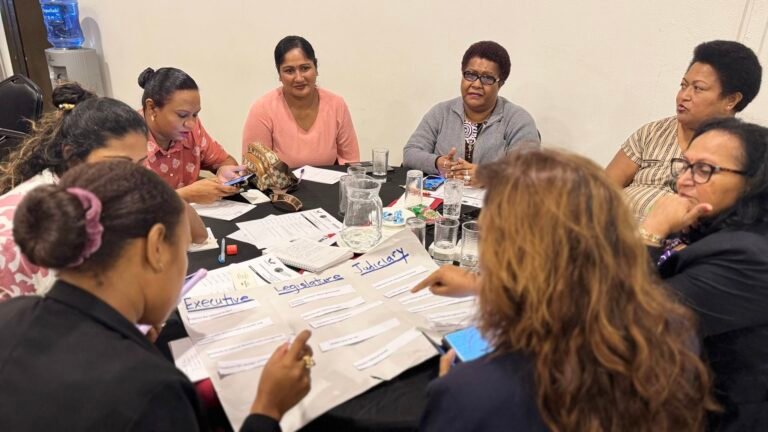
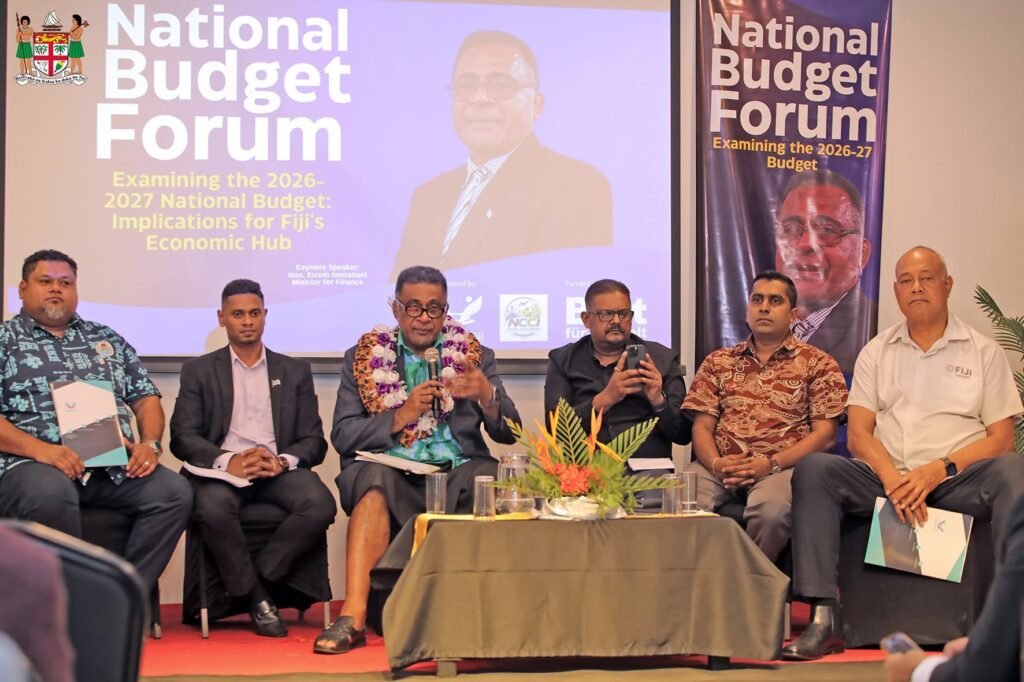
Dialogue Fiji, in partnership with the Nadi Chamber of Commerce and Industry, convened the National Budget Forum for the Western Division at the Tanoa Skylodge Hotel in Nadi on 11 July 2026, bringing together senior government officials, business leaders, industry representatives, civil society, academics and members of the public.
The forum, titled “The 2026–2027 National Budget: Implications for Fiji’s Economic Hub,” provided stakeholders in the Western Division with an opportunity to examine the Government’s fiscal priorities, question policymakers and discuss what the Budget means for tourism, aviation, agriculture, sugar, businesses and households.
Minister for Finance, Commerce and Business Development, Hon. Esrom Immanuel, attended as chief guest and delivered the keynote address. He was joined by Permanent Secretary for Finance Shiri Gounder and senior representatives of key industries operating in the Western Division.
Opening the forum, Dialogue Fiji Executive Director Nilesh Lal said the organisation decided to take its annual National Budget Forum to the Western Division following considerable demand generated by the earlier forum held in Suva.
“The Western Division is the economic hub of the country. It houses our critical tourism and sugar industries, our international airport, much of the agriculture sector and some of Fiji’s largest businesses. Any meaningful dialogue on the National Budget is therefore incomplete without the participation of stakeholders from the West,” Mr Lal said.
He noted that Fiji’s fiscal position remained under considerable pressure, with the Government attempting to consolidate expenditure while continuing to fund essential public services, social assistance, infrastructure, the general election and a possible constitutional referendum.
Mr Lal also highlighted the declining proportion of government expenditure allocated to capital investment and urged policymakers to progressively redirect spending towards productive infrastructure capable of supporting economic growth.
In his keynote address, Hon. Immanuel described the Budget as a responsible attempt to balance fiscal sustainability with the protection of livelihoods and essential services. The Budget projects revenue of approximately $3.82 billion and expenditure of $4.87 billion, producing a deficit of around $1 billion, or seven per cent of GDP.
The Minister said the Government had reduced operational expenses across ministries by approximately 10 per cent while maintaining funding for education, healthcare, social welfare, public-sector salaries and assistance for vulnerable households. He also outlined major planned investments in health facilities, roads, bridges, water, wastewater management and flood alleviation.
The panel discussion featured Mr Gounder; Fiji Airways Chief Corporate Services Officer Kabineli Batiweti; Fiji Sugar Corporation Chief Executive Officer Bhan Pratap Singh; Fiji Commerce and Employers Federation Chief Executive Officer Edward Bernard; and Nadi Chamber of Commerce and Industry board member Dr Ahmed Shakeel. The discussion was moderated by Nadi-based lawyer Volao Pouamau.
Mr Gounder said one of the Budget’s significant achievements was the emerging national consensus that government expenditure must be restrained and progressively shifted from operational spending towards capital investment. He cautioned, however, that Fiji could not indefinitely sustain its present levels of social and recurrent expenditure without compromising infrastructure development and economic growth.
Fiji Airways explained the pressures created by rising global jet-fuel prices and discussed the temporary five per cent Tourism Services Tax, which will apply to qualifying tourism businesses for 12 months. Mr Batiweti described the arrangement as a partnership rather than a bailout, saying the airline would use the support to protect jobs, maintain connectivity and support tourism, trade and investment.
The future of the sugar industry generated one of the evening’s most candid exchanges. FSC outlined the industry’s contribution to rural livelihoods, employment and foreign exchange earnings, while acknowledging declining cane production, ageing infrastructure, substantial debt and the need for diversification. Mr Gounder called for an honest national discussion about whether continued public investment in the industry was delivering sustainable returns for farmers and taxpayers.
Audience members questioned the panel on the cost of living, Fiji Airways fares, labour shortages, overseas migration, agricultural financing, rural infrastructure, government expenditure and the implementation of Budget initiatives.
The forum was supported by Bread for the World and formed part of Dialogue Fiji’s continuing efforts to promote informed, evidence-based and constructive public engagement on major national policy issues.
Dialogue Fiji thanked the Nadi Chamber of Commerce and Industry, the Minister and Permanent Secretary for Finance, the panellists and members of the public for contributing to a robust discussion on the economic future of the Western Division and Fiji.